

© DL4FG Weilburg
Amateur radio
General
In the following text I have been very brief. The numerous links will
surely answer all questions.
History:
The radio technology, on which the hobby amateur radio builds up,
began only 1888 with Heinrich Hertz. Im succeeded for the first time
in generating and transmitting electromagnetic waves. But it was not
until 1897 that Guglielmo Marconi began the history of wireless
telegraphy. The regulations of the radio operation, which should serve
for a regulated use of the available frequencies, were decided on the
Washington world wave conference of 1927. There appeared also for
the first time the term radio amateur. Already in May 1914 the
American Radio Relay League ARRL was founded in America. They
see themselves as the national association of radio amateurs in the
USA.In Germany one could exercise only starting from 1924
officially receiving enterprise. At the end of May 1933, 180 old
Schwarzfunkers were officially licensed.
In 1928, American radio amateur Paul M. Segal (W9EEA) wrote a
code of honor known as the Ham Spirit (The Amateur's Code).
At the beginning of the Second World War, all previously issued
licenses were recovered.
After the Second World War, the German Federal Post Office
announced that from 1948 amateur radio licenses would be held. But
only on 19.01.1949 an amateur radio law came into force. From then
on, amateur radio licenses could be issued officially.
On 31.12.2016, the Federal Network Agency registered 65095 Class
A and E radio amateurs.
To work on the amateur radio bands you need, among other things, a
radio. A transceiver is most commonly used. This is an artificial word
made up of transmit (send) and receive (receive), i.e. a transceiver. The antenna is an
important part of a radio system. An overview of antennas can be seen here. Although
antennas look rather inconspicuous, antenna theory is very complex. Waveguides are also
used for signal transmission at high frequencies. For some years now, transceivers based
on the SDR (software define radio) principle have also been used.
The weather also plays a major role in shortwave propagation. The so-called radio weather
shows the propagation controls on shortwave. The radio weather is shown graphically in
the amateur radio magazines. For example, radio weather forecast CQ-DL 3-21 and radio
weather radio amateur 3-21. he reception of amateur radio is generally allowed. There are
a lot of royalty-free low-power approvals today. These include, for example Remote
controls, wireless microphones, baby monitors, Bluetooth, WLAN, mobile communications.
Radio amateurs are bound to certain frequencies during their transmission. These
frequencies range from 135 kHz to 250 GHz and are divided into individual frequency
ranges.

German




Amateur radio is a very versatile hobby. In addition to technology and self-construction, it is above all the international understanding across national
borders. In amateur radio (ARDF), the task is to find in the shortest possible time previously hidden transmitter. That is sometimes in the legs.
Still others collect the so-called QSL cards (confirmation of the radio link) and then apply for amateur radio diplomas. Also, participation in an FM or
SW contest is very popular with some radio amateurs. Of course, the technology still plays a big role. In the amateur radio magazines building
instructions for antennas, test and measuring devices and other devices for the daily amateur radio operation are often to be found. You'll also find
building instructions that do not seem to have much to do with amateur radio at first glance,
mind you at first sight.
In addition to the usual kinds of transmission such as telegraphy and telephony with different
modulation methods often find digital transmission method use. Packet Radio, transmits digital
data in short data packets (usually up to 255 bytes). Relay stations (digipeater) can be used to
reach distances of several 100km. Pactor is a digital mode designed specifically for short-wave
transmission. It compensates for fluctuations in field strength and interferences that
frequently occur on SW . In APRS the data is transmitted partly over radio links on the 2m,
70cm, and 11m band. If the data encounters a special APRS Digipeater (IGATE for short) they
are forwarded via the Internet. The operating mode PSK 31 (Phase Shift Keying, 31 Baud) is an
operating mode for digital wireless communication and is mainly used on shortwave radio
amateurs.
With the operating mode (SSTV) still images in SW or color can be transmitted. For this
purpose, the brightness information is converted into tones between 1500 and 2300 Hz. SSTV
signals are typically transmitted on amateur bands from 80m to 23cm and on the 11m band.)
Amateur Television (ATV) broadcasts are moving images, as in television. Because of the higher
bandwidth of ATV transmission, transmission is at frequencies above 430 MHz (70 cm). Here
is an overview of the operating modes. Relay stations are often used to increase the range of
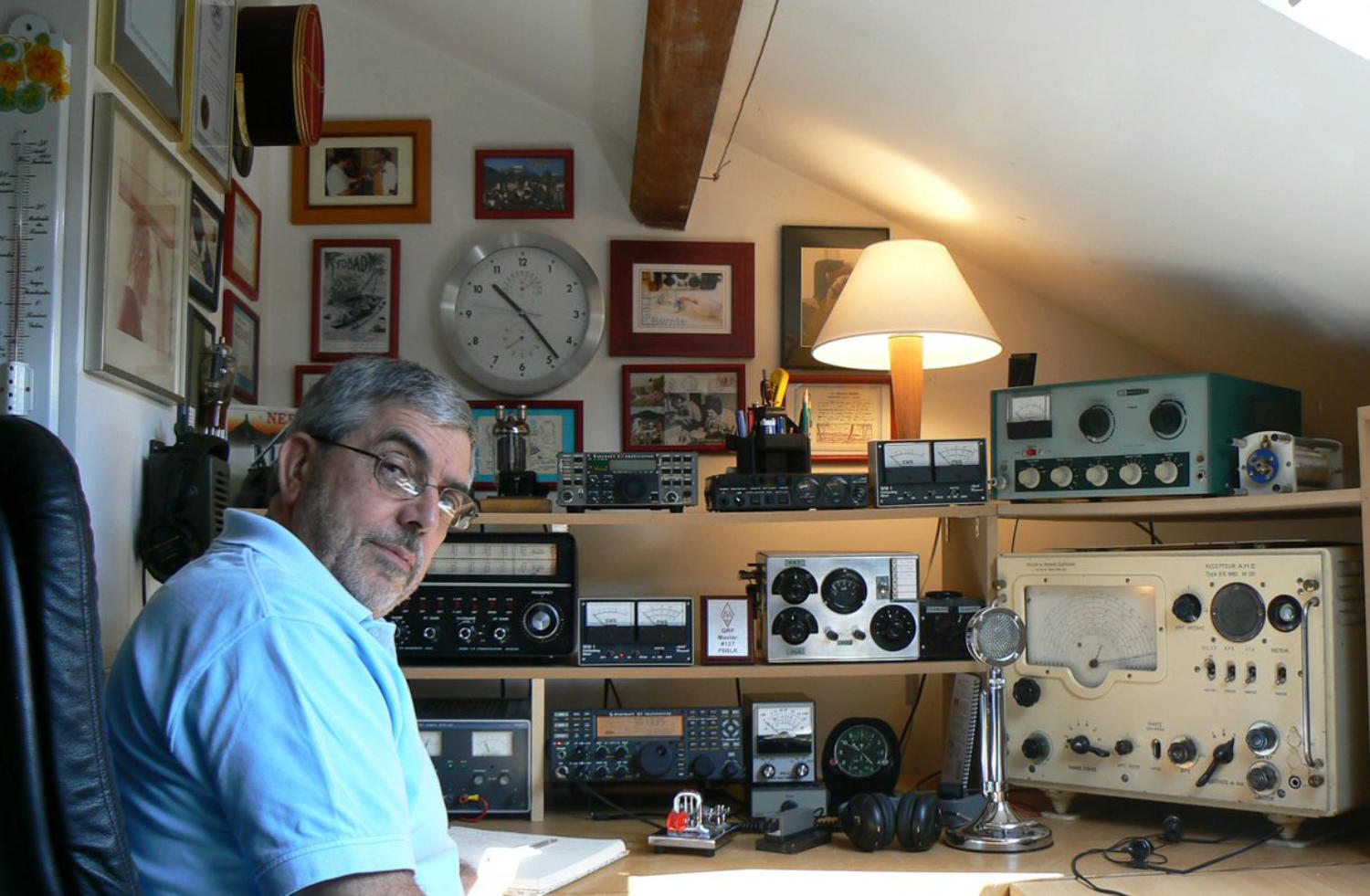
French amateur radio station. Source Wikipedia
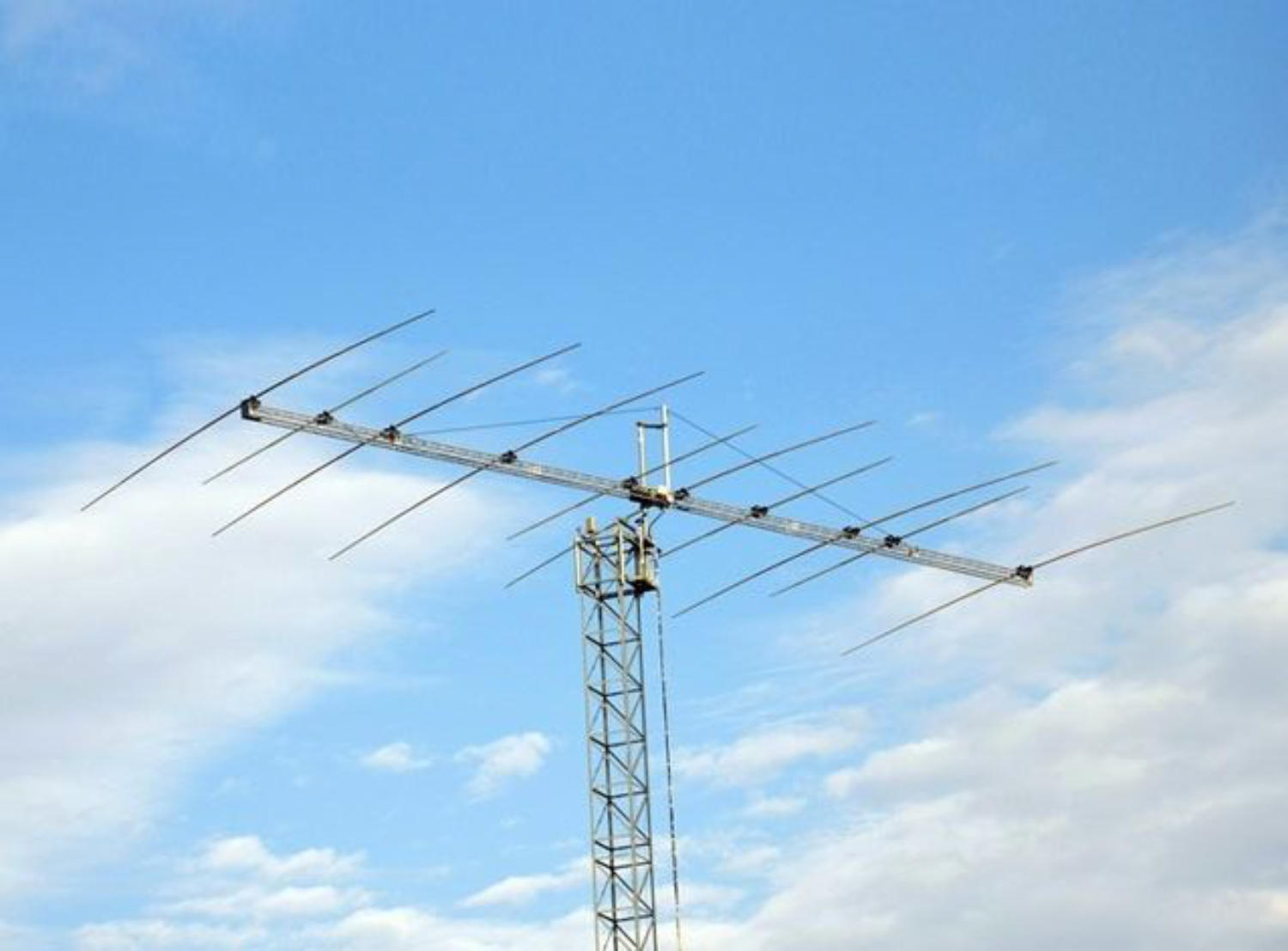
Shortwave antenna 14-30 MHz Source Google / Antennas / Images
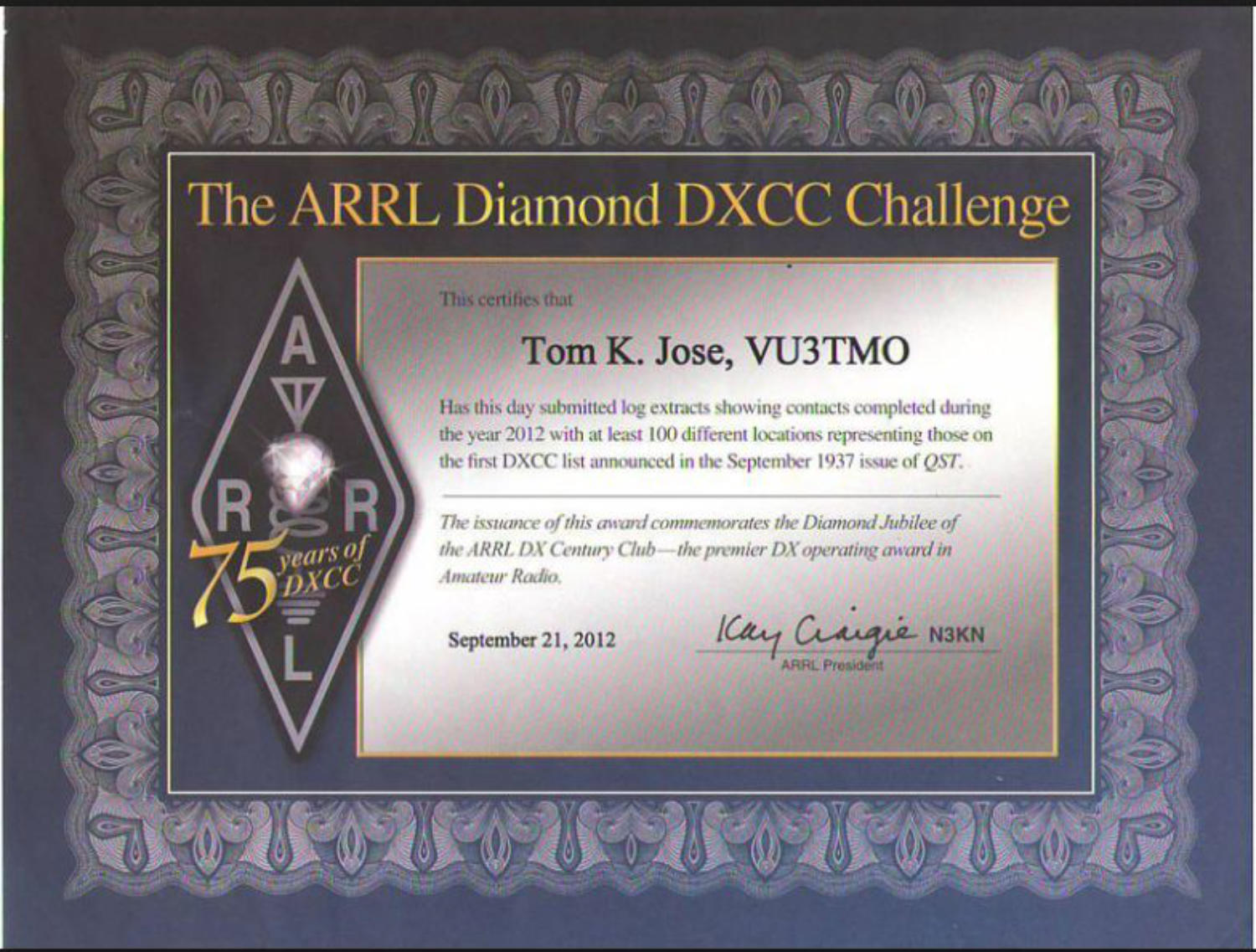
Amateur radio diploma from ARRL. Source Google Picture
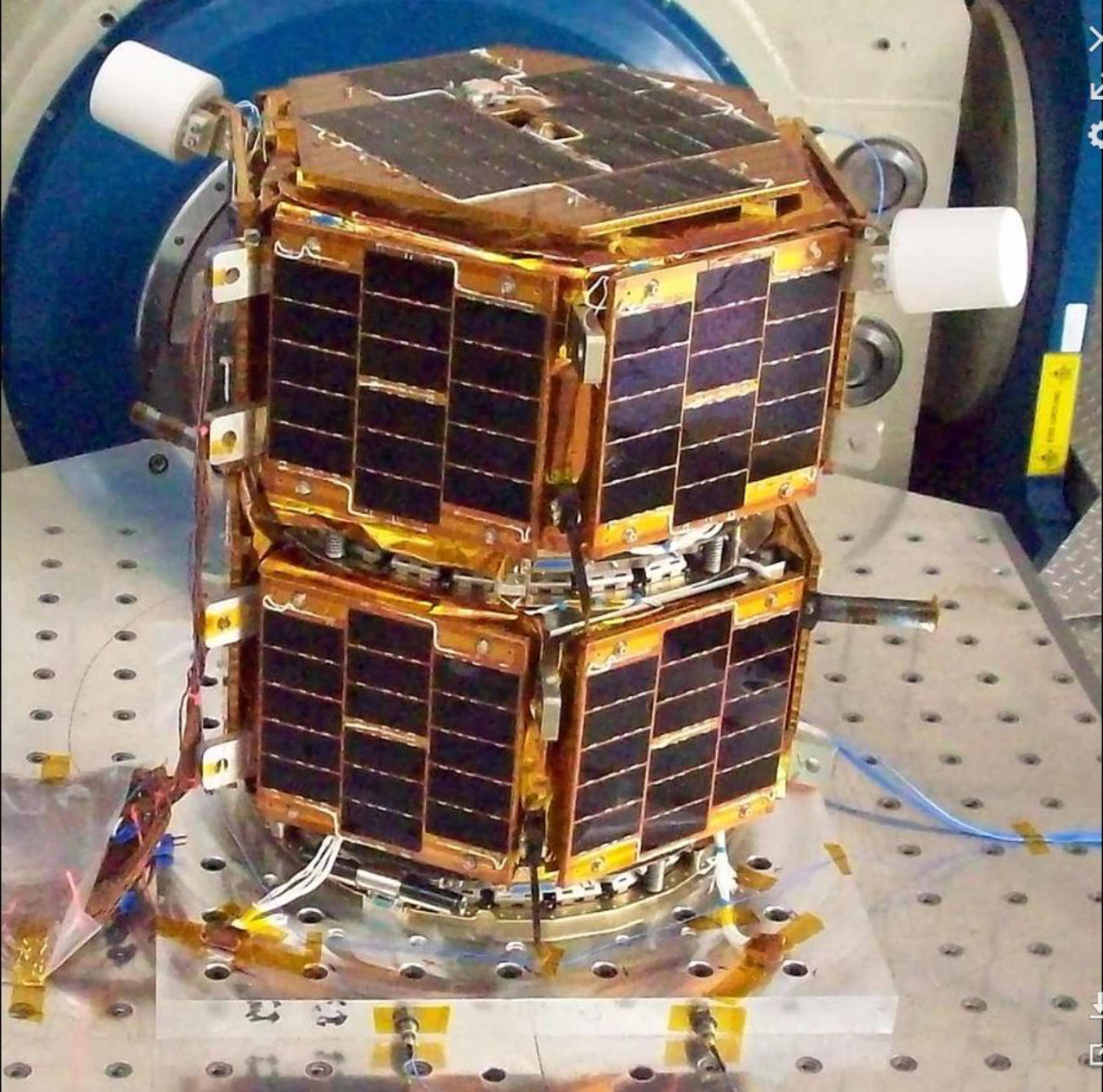
Amateur radio satellites Oscar 69 and Oscar 70.
Source Wikipedia.
the radio transmission. are often used The relay stations are located at elevated points (masts, mountain tops) and send out a received radio
signal on another frequency again. In an echolink, connection, existing relays for transmission are networked via Voice over IP over the Internet.
The radio connection via amateur radio satellites allows particularly long ranges, especially at wavelengths below 2m. The first OSCAR Satellite
(Orbiting Satellite Carrying Amateur Radio) was launched on 12.12.1961 from Vandenberg Air Force Base in America. The radio connection via
amateur radio satellites allows particularly long ranges, especially at wavelengths below 2m. In an EME (earth-moon-earth) connection,
communication between two distant points is achieved by a radio signal that is sent towards the Moon and reflected back to Earth by the Moon
as a passive reflector.
Picture gallery: Some QSL cards from Germany
distant points is achieved by a radio signal that is sent
towards the Moon and reflected back to Earth by the
Moon as a passive reflector.
In the meteor scatter method, the radio signals are
reflected on the tracks of fading meteorites. As a
result, distances of up to 2500km can be achieved,
lasting from a few seconds to two minutes. On the
International Space Station ISS, which has been
permanently occupied by astronauts since 2 November
2000, there is also an amateur radio station. Radio
operation can be carried out in different operating
modes from the International Space Station ISS.
.When sparking, the call sign is often spelled after the
spelling alphabet for air traffic, NATO, and amateur
radio. At DL4FG, the Delta Lima 4 Foxtrott Golf would
be. There are still further shortcuts in amateur radio
such as the Q groups and abbreviations that are still
telegraphic, such as om, yl, 73,55, and so on.
The path to amateur radio leads either via the DARC (German Amateur Radio Club) in Baunatal near Kassel or the VFDB e.V. (Association of Radio
Amateurs in Telekom and Post e.V.). Also with the numerous local associations in Germany one finds help with the first steps.
Of course, the explanation for the name of my website may not be missing here. The name DL4FG is my amateur radio call sign. This was assigned
to me on 17.11.1981 after passing Morse examination. Of course, I had no influence on how my call sign is. But there are certainly still radio
amateurs in Germany, with whom I look quite old with this call sign (because the callsign is quite old). I'm certainly only born in 1958 AD.
Incidentally, I already had a call sign. This was a call sign of the C license and listened to the name DB7FP. It came from January 1975. Meanwhile,
the license classes have changed and thus the requirements of the test.
There are also a number of prominent radio amateurs. Here is a list.
Wikipedia









© DL4FG WEILBURG
In the following text
I have been very
brief. The numerous
links will surely
answer all questions.
History:
The radio technology,
on which the hobby
amateur radio builds
up, began only 1888
with Heinrich Hertz.
Im succeeded for the first time in generating and transmitting
electromagnetic waves. But it was not until 1897 that Guglielmo Marconi
began the history of wireless telegraphy. The regulations of the radio
operation, which should serve for a regulated use of the available
frequencies, were decided on the Washington world wave conference of
1927. There appeared also for the first time the term radio amateur.
Already in May 1914 the American Radio Relay League ARRL was founded in
America. They see themselves as the national association of radio amateurs
Amateur radio
General
German
French amateur radio station. Source Wikipedia
in the USA. In Germany one
could exercise only starting
from 1924 officially receiving
enterprise. At the end of May
1933, 180 old Schwarzfunkers
were Amateur officially
licensed. In 1928, American
radio amateur Paul M. Segal
(W9EEA) wrote a code of
honor known as the Ham Spirit
(The Amateur's Code).
At the beginning of the Second World War, all previously issued licenses
were recovered.
After the Second World War, the German Federal Post Office announced
that from 1948 amateur radio licenses would be held. But only on
19.01.1949 an amateur radio law came into force. From then on, amateur
radio licenses could be issued officially.
On 31.12.2016, the Federal Network Agency registered 65095 Class A and
E radio amateurs.
To work on the amateur radio bands you need, among other things, a radio.
A transceiver is most commonly used. This is an artificial word made up of
transmit (send) and receive (receive), i.e. a transceiver. The antenna is an
important part of a radio system. An overview of antennas can be seen
here. Although antennas look rather inconspicuous, antenna theory is very
complex. Waveguides are also used for signal transmission at high
frequencies. For some years now, transceivers based on the SDR (software
define radio) principle have also been used.
The weather also plays a major role in shortwave propagation. The so-called
radio weather shows the propagation controls on shortwave. The radio
weather is shown graphically in the amateur radio magazines. For example,
radio weather forecast CQ-DL 3-21 and radio weather radio amateur 3-
21.The reception of amateur radio is generally allowed. There are a lot of
royalty-free low-power approvals today. These include, for example Remote
controls, wireless microphones, baby monitors, Bluetooth, WLAN, mobile
communications.
Radio amateurs are bound to certain frequencies during their transmission.
These frequencies range from 135 kHz to 250 GHz and are divided into
individual frequency ranges.
Amateur radio is a very versatile hobby. In addition to technology and self-
construction, it is above all the international understanding across national
borders. In amateur radio (ARDF), the task is to find in the shortest
possible time previously hidden transmitter. That is sometimes in the legs.
Shortwave antenna 14-30 MHz Source
Google / Antennas / Images
Amateur radio diploma from ARRL. Source Google Picture
In addition to the usual
kinds of transmission such
as telegraphy and telephony
with different modulation
methods often find digital
transmission method use.
Packet Radio, transmits
digital data in short data
packets (usually up to 255
bytes). Relay stations
(digipeater) can be used to
reach distances of several
100km. Pactor is a digital
mode designed specifically
for short-wave transmission. It compensates for fluctuations in field
strength and interferences that frequently occur on SW . In APRS the data
is transmitted partly over radio links on the 2m, 70cm, and 11m band. If the
data encounters a special APRS Digipeater (IGATE for short) they are
forwarded via the Internet. The operating mode PSK 31 (Phase Shift Keying,
31 Baud) is an operating mode for digital wireless communication and is
mainly used on shortwave radio amateurs.
With the operating mode (SSTV) still images in SW or color can be
transmitted. For this purpose, the brightness information is converted into
tones between 1500 and 2300 Hz. SSTV signals are typically transmitted on
amateur bands from 80m to 23cm and on the 11m band.) Amateur Television
(ATV) broadcasts are moving images, as in television. Because of the higher
bandwidth of ATV transmission, transmission is at frequencies above 430
MHz (70 cm). Here is an overview of the operating modes. Relay stations are
often used to increase the range of the radio transmission. are often used
The relay stations are located at elevated points (masts, mountain tops) and
send out a received radio signal on another frequency again. In an echolink,
connection, existing relays for transmission are networked via Voice over IP
over the Internet. The radio connection via amateur radio satellites allows
particularly long ranges, especially at wavelengths below 2m. The first
OSCAR Satellite (Orbiting Satellite Carrying Amateur Radio) was launched
on 12.12.1961 from Vandenberg Air Force Base in America. The radio
connection via amateur radio satellites allows particularly long ranges,
especially at wavelengths below 2m. In an EME (earth-moon-earth)
connection, communication between two distant points is achieved by a radio
signal that is sent towards the Moon and reflected back to Earth by the
Moon as a passive reflector.
In the meteor scatter method, the radio signals are reflected on the tracks
of fading meteorites. As a result, distances of up to 2500km can be
achieved, lasting from a few seconds to two minutes. On the International
Space Station ISS, which has been permanently occupied by astronauts
since 2 November 2000, there is also an amateur radio station. Radio
operation can be carried out in different operating modes from the
International Space Station ISS.
When sparking, the call sign is often spelled after the spelling alphabet for
air traffic, NATO, and amateur radio. At DL4FG, the Delta Lima 4 Foxtrott
Golf would be. There are still further shortcuts in amateur radio such as the
Q groups and abbreviations that are still telegraphic, such as om, yl, 73,55,
and so on.
The path to amateur radio leads either via the DARC (German Amateur
Radio Club) in Baunatal near Kassel or the VFDB e.V. (Association of Radio
Amateurs in Telekom and Post e.V.). Also with the numerous local
associations in Germany one finds help with the first steps.
Of course, the explanation for the name of my website may not be missing
here. The name DL4FG is my amateur radio call sign. This was assigned to me
on 17.11.1981 after passing Morse examination. Of course, I had no influence
on how my call sign is. But there are certainly still radio amateurs in
Germany, with whom I look quite old with this call sign (because the callsign
is quite old). I'm certainly only born in 1958 AD .. Incidentally, I already had
a call sign. This was a call sign of the C license and listened to the name
DB7FP. It came from January 1975. Meanwhile, the license classes but have
changed and thus the requirements of the test. There are also a number of
prominent radio amateurs. Here is a list.
Wikipedia
Amateur radio satellites Oscar 69
and Oscar 70. Source Wikipedia.
Picture gallery: Some QSL cards from Germany


Still others collect the so-called QSL cards (confirmation of the radio link)
and then apply for amateur radio diplomas. Also, participation in an FM or
KW contest is very popular with some radio amateurs. Of course, the
technology still plays a big role. In the amateur radio magazines building
instructions for antennas, test and measuring devices and other devices for
the daily amateur radio operation are often to be found. You'll also find
building instructions that do not seem to have much to do with amateur
radio at first glance, mind you at first sight.

