
© DL4FG Weilburg
Weilburg
History

History:
For the first time Weilburg was mentioned under the name Wilineburch in 906.
918, the place gained special historical significance, as King Konrad on the
deathbed, the Imperial Regalia bring over to Saxon King Henry.
1295 Weilburg received the city rights. In 1355, Count Johann I von Nassau
built his residence, made some structural changes and in 1359 built a stone
bridge over the river Lahn. For several centuries, the house Nassau-Weilburg
shaped the fate of the city. 1535 was the four-winged high castle of Count Philip
III. built, which was expanded by Count Johann Ernst. The construction of a
park and the change of the city front also fell into the time of Count Johann
Ernst (1664 - 1719).
From the year 1806 Weilburg was the seat of government of the Duchy of
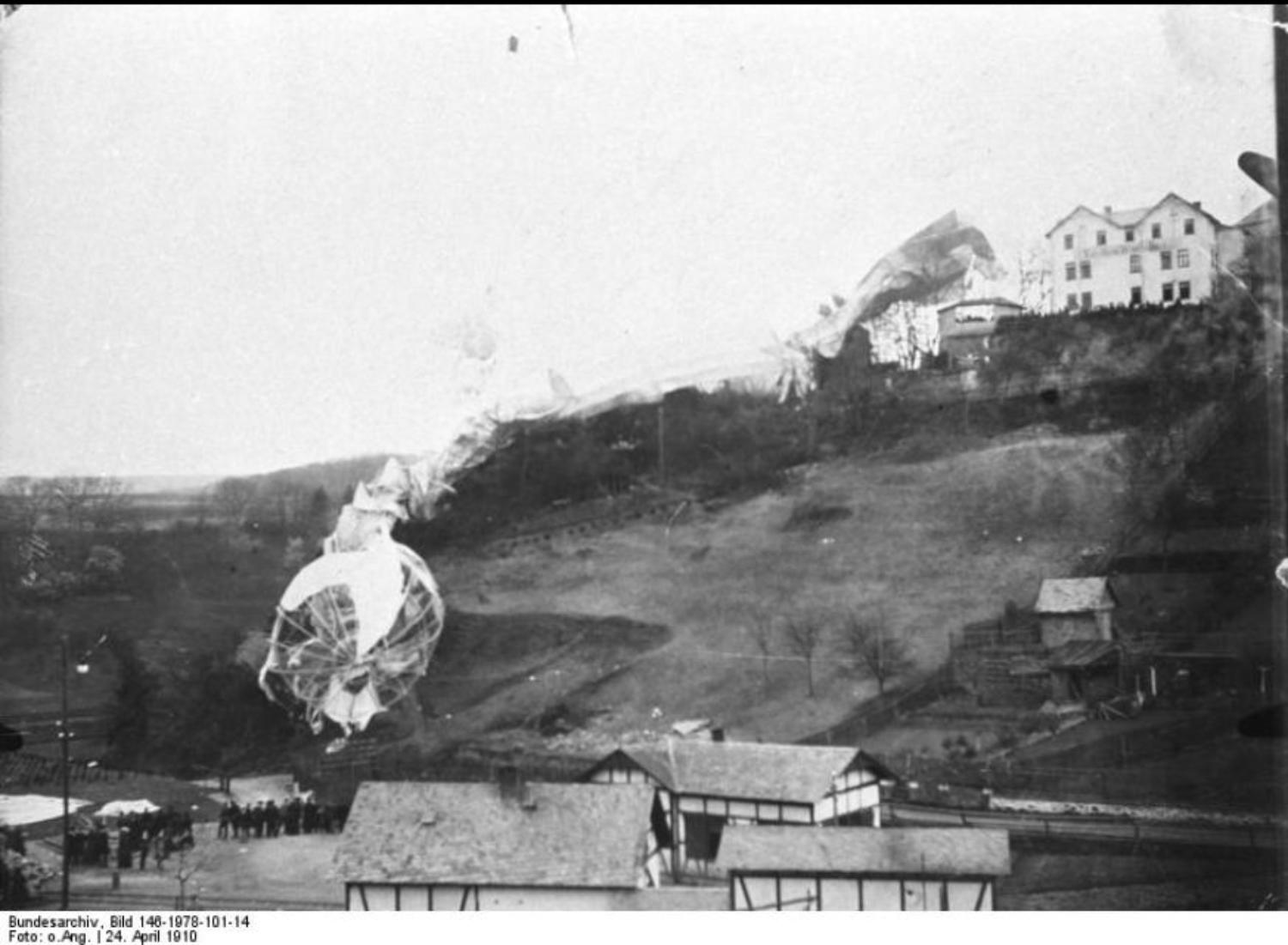
Stranded Zeppelin in Weilburg
Source: Wikipedia
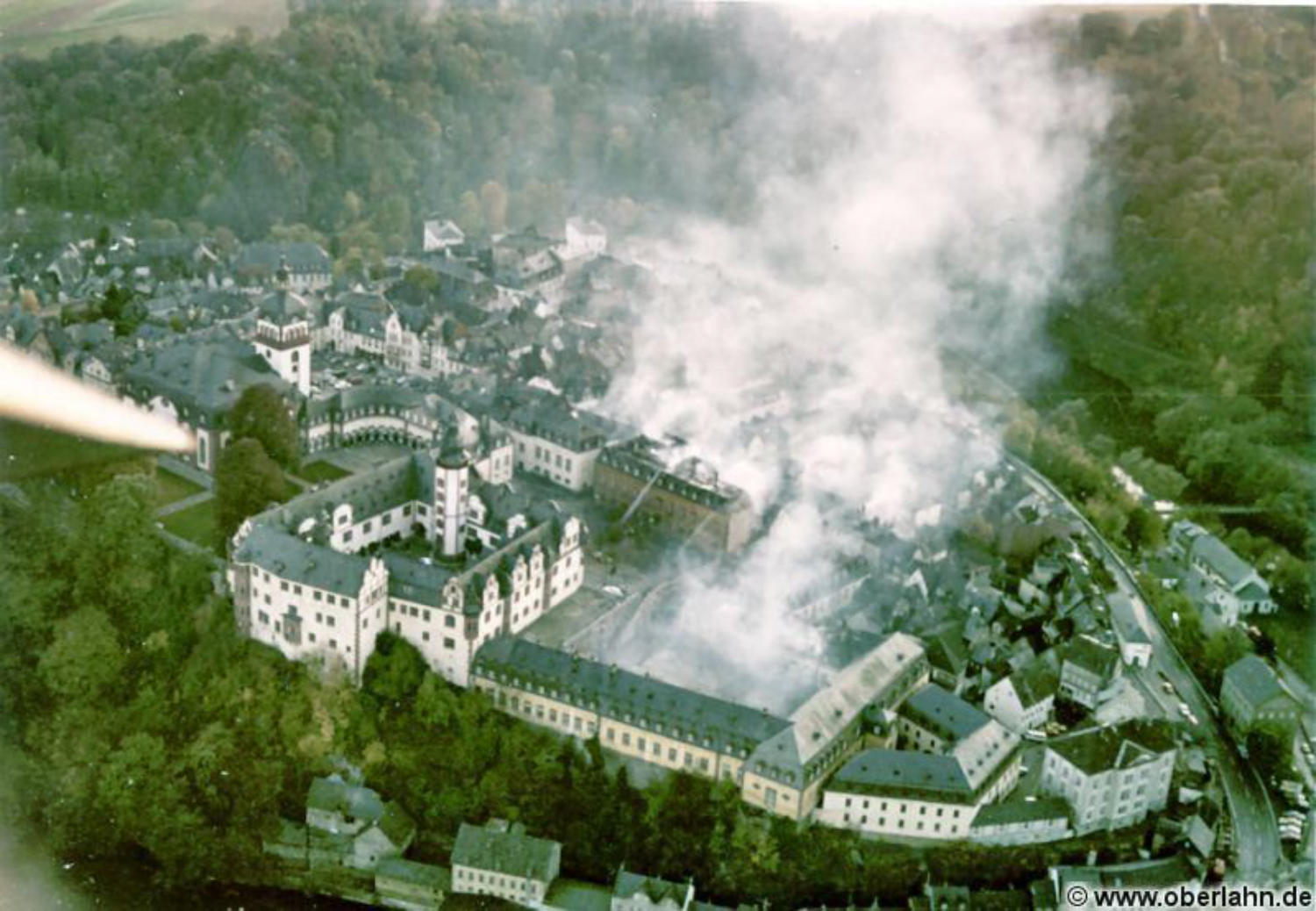
Great fire in Weilburg in 1972

German




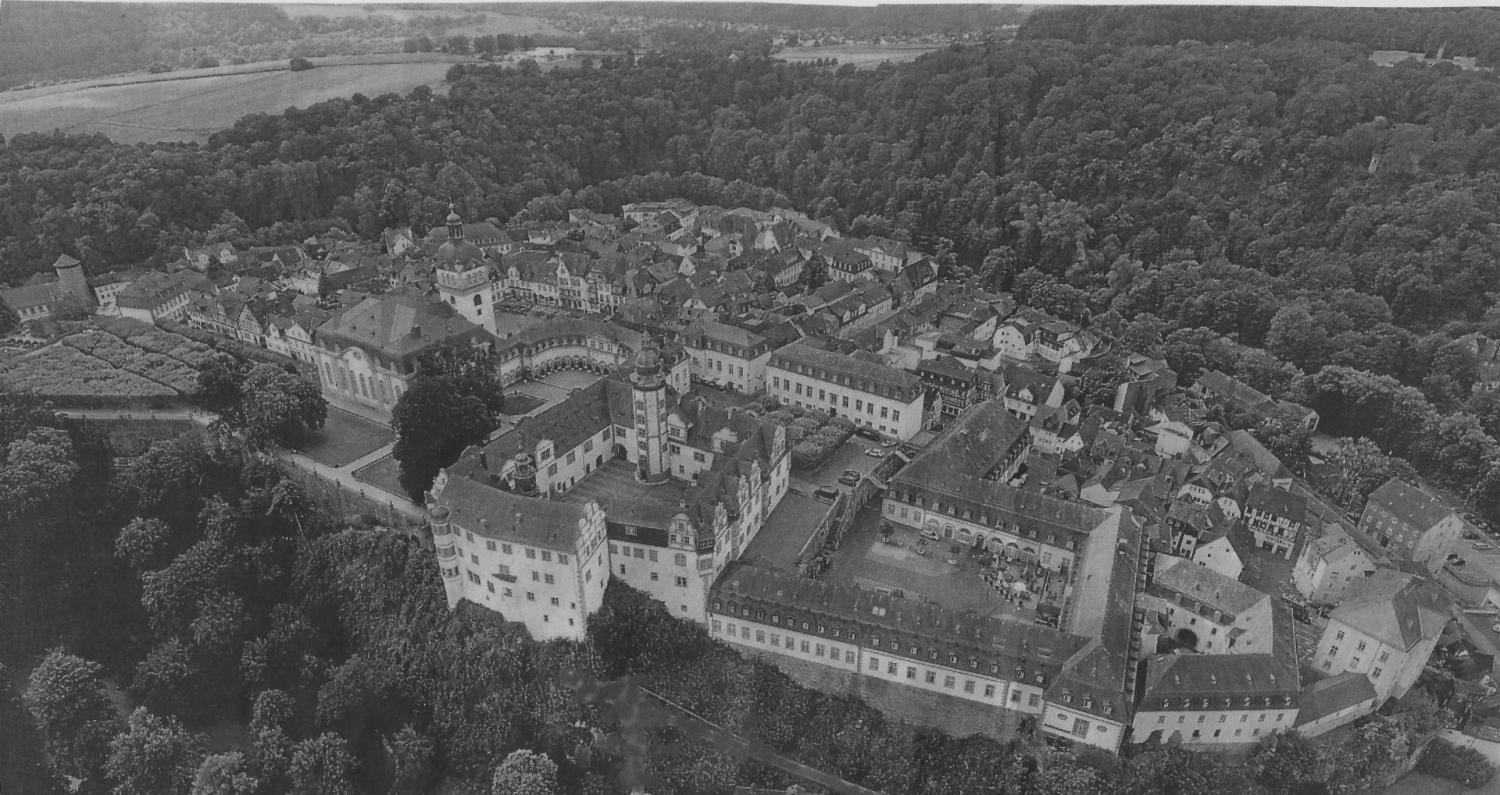
Weilburger Castle Aerial photograph Source: Weilburger Tageblatt from SA 3.3.2018
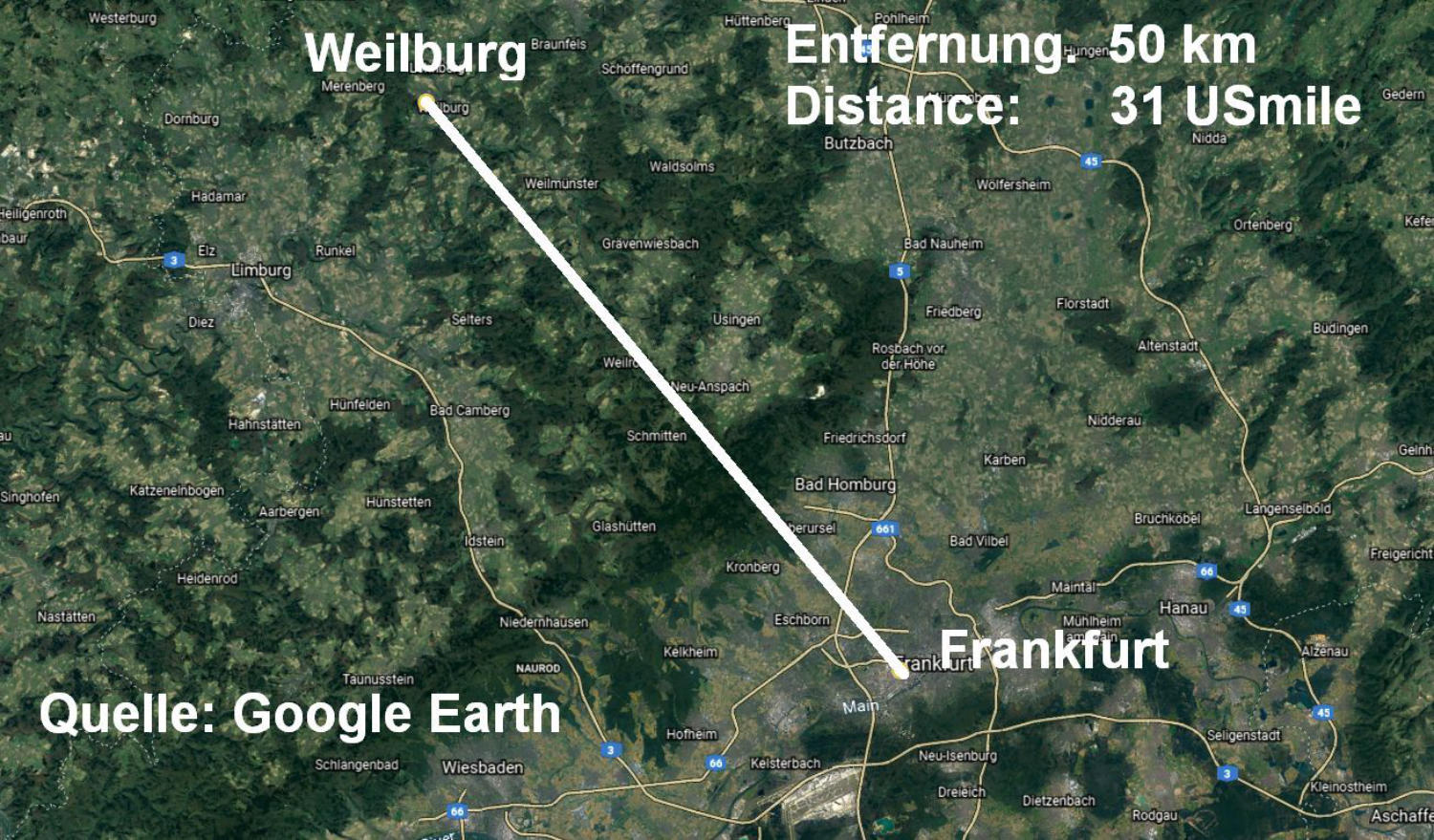
Weilburg is located between the
Westerwald and the Taunus with the Lahn
as a dividing line, about 55 km (34miles) NW
from Frankfurt am Main. The exact
geographic location is 8 ° 16 'east longitude
and 50 ° 29' north latitude. The height
above sea level moves in Weilburg between
127.6 m (418 ft) (ship tunnel exit) and
258.7m (848,7 ft) (city exit Limburger Str./turn-off Waldhausen).
In Weilburg and the districts lived on 31 December 2015 13337 people.
The lowest point is 125.9 m. (413,1 ft) above sea level at Kirchhofen and
the highest with 370.1 m. (1214,2 ft) above sea level. at Hohenstein near
Hasselbach. (Source Wikipedia).
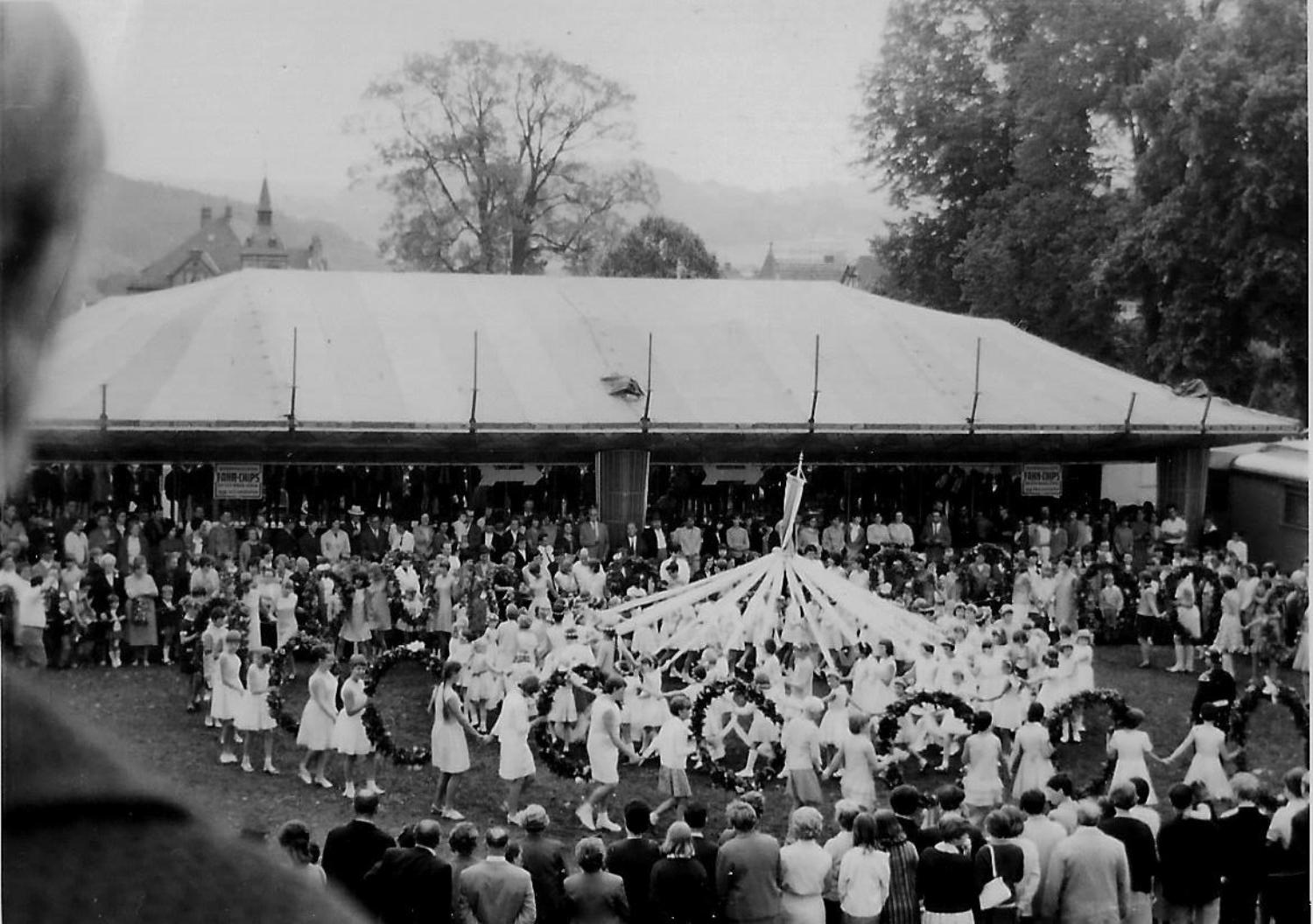
Fairground dance at the Weilburg fair
Weilburg (until 1816). Weilburg was annexed in 1866, and with it the Duchy of Nassau of
Prussia.
Weilburg is also known for its built after 1800 mud rammed buildings (Pisé buildings)
A Weilburg tradition is the civil guard of the city Weilburg e.V. It was founded in 1788 as
Bürgersöhnekorps, from which then emerged in 1813 the uniformed citizens and
Bürgersöhnekorps.
Today the citizen guard is carrier and organizer of the Weilburger Kirchweih, which is
celebrated since 1593.
Despite all the changes, some traditions such as the shooting of the fair, the shooting on the
honorary disc with prizes and the fair dance have been preserved.
During the Third Reich, the National Socialists in Weilburg had the say. The pogrom night
left its ugly traces in the city. The synagogue was not destroyed only because it had passed
into the possession of a Weilburg merchant. Commemorative plaques for the Jewish victims
from Weilburg are located in the Jewish cemetery and on a clay tablet on the south side of the
castle church.
Weilburg was up to the regional reform in 1974 county seat of the Oberlahnkreis and then Limburg
became the county seat of the district Limburg-Weilburg.
The city Weilburg has from 17.6. until 26.6.2005 the Hessentag aligned. This also changed the
street layout in Weilburg's city center and built the Oberlahnbrücke and a car tunnel for better
transport connections.
Weilburg has 6 partner cities and a partnership.
Partner City
since
Privas, France
1958
Zevenaar, Netherlands
1966
Kežmarok, Slovakia
1990
Colmar-Berg, Luxembourg
2004
Kizilcahamam, Turkey
2006
Quattro Castella, Italy
2010
Partnership with the district group Rheingau-Hessen-Nassau of the Association of Reservists of
the German Armed Forces e.V.
Weilburg also has connections to the Grand Duchy of Luxembourg. Since 1890, the Grand Dukes of Luxembourg emerged from the House of Nassau. This
is also evidenced by the twinning with Colmar-Berg in Luxembourg.
In Weilburg there were also calamities that found their way into the media.
On 25.04.1910 an airship Zeppelin Z2 (LZ5) is stranded in Weilburg: At the rock a blackboard reminds of the disaster. The airship was unmanned and had
pulled loose in a strong wind near Homburg. Then the airship drove without direction in the direction of Weilburg and crashed on Webers mountain, a rock
between the Guntersau and Weilburg. In the local museum are still very small remnants of the covering and the aluminum framework to see.
Another misfortune was a major fire in Weilburg's city center on October 18, 1972. Parts of the castle, the community center, large parts of the local
museum and residential buildings were the victims of this. On this day we had just finished school at the gym on the Hainallee. As the sirens howled and
smoke rose over the city, I ran again towards the city center. The smoke in the streets and the narrow buildings in the city did not make it easy for the
fire brigades to control the fire. But it could be prevented that even more damage was done.
Weilburg also has a lot to offer in terms of architecture. So there is Germany's oldest ship's tunnel.
The tunnel underpasses the Mühlberg over a length of 195 m. ( 640 ft) The idea of building a ship's tunnel dates back to 1838. The tunnel was then
inaugurated on 18 September 1847. Its importance as a shipping lane lost the ship's tunnel after only 10 years. From 1857, the transports were relocated
to the Lahn Valley Railway. Since the Hessentag 2005 an autotunnel was built parallel to the ship's tunnel. Thus, Weilburg has a car, rail and shipping
tunnel right next to each other. I believe that such a thing is very rare.
Another special feature are the so-called Pisé buildings. These are mud rammed buildings (by France Piser). The house Hainallee 1 with its 6 floors is
considered the largest Pisé building in Germany. In Weilburg there are still numerous buildings in Pisé construction.








© DL4FG WEILBURG
(ship tunnel exit) and 258.7m (848,7 ft) (city exit Limburger Str./turn-off
Waldhausen).
In Weilburg and the districts lived on 31 December 2015 13337 people. The
lowest point is 125.9 m. (413,1 ft) above sea level.
at Kirchhofen and the highest with 370.1 m. (1214,2 ft) above sea level. at
Hohenstein near Hasselbach. (Source Wikipedia).
History:
For the first time Weilburg was mentioned under the name Wilineburch in
906. 918, the place gained special historical significance, as King Konrad on
the deathbed, the Reichsinsignien the Saxon King Henry.
1295 Weilburg received the city rights. In 1355, Count Johann I von Nassau
built his residence, made some structural changes and in 1359 built a stone
bridge over the river Lahn. For several centuries, the house Nassau-
Weilburg shaped the fate of the city. 1535 was the four-winged high castle
of Count Philip III. built, which was expanded by Count Johann Ernst. The
construction of a park and the change of the city front also fell into the
time of Count Johann Ernst (1664 - 1719).
From the year 1806 Weilburg was the seat of government of the Duchy of
Weilburg (until 1816). Weilburg was annexed in 1866, and with it the Duchy
of Nassau of Prussia.
Weilburg is also known for its built after 1800 mud rammed buildings (Pisé
buildings)
A Weilburg tradition is the civil guard of the city Weilburg e.V. It was
founded in 1788 as Bürgersöhnekorps, from which then emerged in 1813 the
uniformed citizens and Bürgersöhnekorps.
Today the citizen guard is carrier and organizer of the Weilburger
Kirchweih, which is celebrated since 1593.


Despite all the changes, some traditions
such as the shooting of the fair, the
shooting on the honorary disc with prizes
and the fair dance have been preserved.
During the Third Reich, the National
Socialists in Weilburg had the say. The
pogrom night left its ugly traces in the
city. The synagogue was not destroyed
only because it had passed into the
possession of a Weilburg merchant.
Commemorative plaques for the Jewish
victims from Weilburg are located in the
Jewish cemetery and on a clay tablet on
the south side of the castle church.
Weilburg was up to the regional reform in
1974 county seat of the Oberlahnkreis and then Limburg became the county
seat of the district Limburg-Weilburg.
The city Weilburg has from 17.6. until 26.6.2005 the Hessentag aligned. This
also changed the street layout in Weilburg's city center and built the
Oberlahnbrücke and a car tunnel for better transport connections.
Weilburg has 6 partner cities and a partnership.
Partner city
since
Privas, France
1958
Zevenaar, Netherlands
1966
Kežmarok, Slovakia
1990
Colmar-Berg, Luxembourg 2004
Kizilcahamam, Turkey
2006
Quattro Castella, Italy
2010
Partnership with the district group Rheingau-Hessen-Nassau of the
Association of Reservists of the German Armed Forces e.V.
Weilburg also has connections to the Grand Duchy of Luxembourg. Since
1890, the Grand Dukes of Luxembourg emerged from the House of Nassau.
This is also evidenced by the twinning with Colmar-Berg in Luxembourg.
In Weilburg there were also calamities that found their way into the media.
On 25.04.1910 an airship Zeppelin Z2 (LZ5) is stranded in Weilburg At the
rock a blackboard reminds of the disaster. The airship was unmanned and
had pulled loose in a strong wind near Homburg. Then the airship drove
without direction in the direction of Weilburg and crashed on Webers
mountain, a rock between the Guntersau and Weilburg. In the local museum
are still very small remnants of the covering and the aluminum framework to
see.
Another misfortune was a major fire in Weilburg's city center on October
18, 1972. Parts of the castle, the community center, large parts of the local
museum and residential buildings were the victims of this. On this day we
had just finished school at the gym on the Hainallee. As the sirens howled
and smoke rose over the city, I ran again towards the city center. The smoke
in the streets and the narrow buildings in the city did not make it easy for
the fire brigades to control the fire. But it could be prevented that even
more damage was done.
Weilburg also has a lot to offer in terms of architecture. So there is
Germany's oldest ship's tunnel.
The tunnel underpasses the Mühlberg over a length of 195 m. ( 640 ft) The
idea of building a ship's tunnel dates back to 1838. The tunnel was then
inaugurated on 18 September 1847. Its importance as a shipping lane lost the
ship's tunnel after only 10 years. From 1857, the transports were relocated
to the Lahn Valley Railway. Since the Hessentag 2005 an autotunnel was built
parallel to the ship's tunnel. Thus, Weilburg has a car, rail and shipping
tunnel right next to each other. I believe that such a thing is very rare.
Another special feature are the so-called Pisé buildings. These are mud
rammed buildings (by France Piser). The house Hainallee 1 with its 6 floors is
considered the largest Pisé building in Germany. In Weilburg there are still
numerous buildings in Pisé construction.
Weilburg
History
German




Weilburger Castle Aerial photograph Source: Weilburger Tageblatt from SA 3.3.2018
Weilburg is located between the Westerwald and
the Taunus with the Lahn as a dividing line, about 55
km (34miles) NW from
Frankfurt am Main. The exact geographic location is
8 ° 16 'east longitude and 50 ° 29' north latitude.
The height above sea
level moves in Weilburg between 127.6 m (418 ft)



